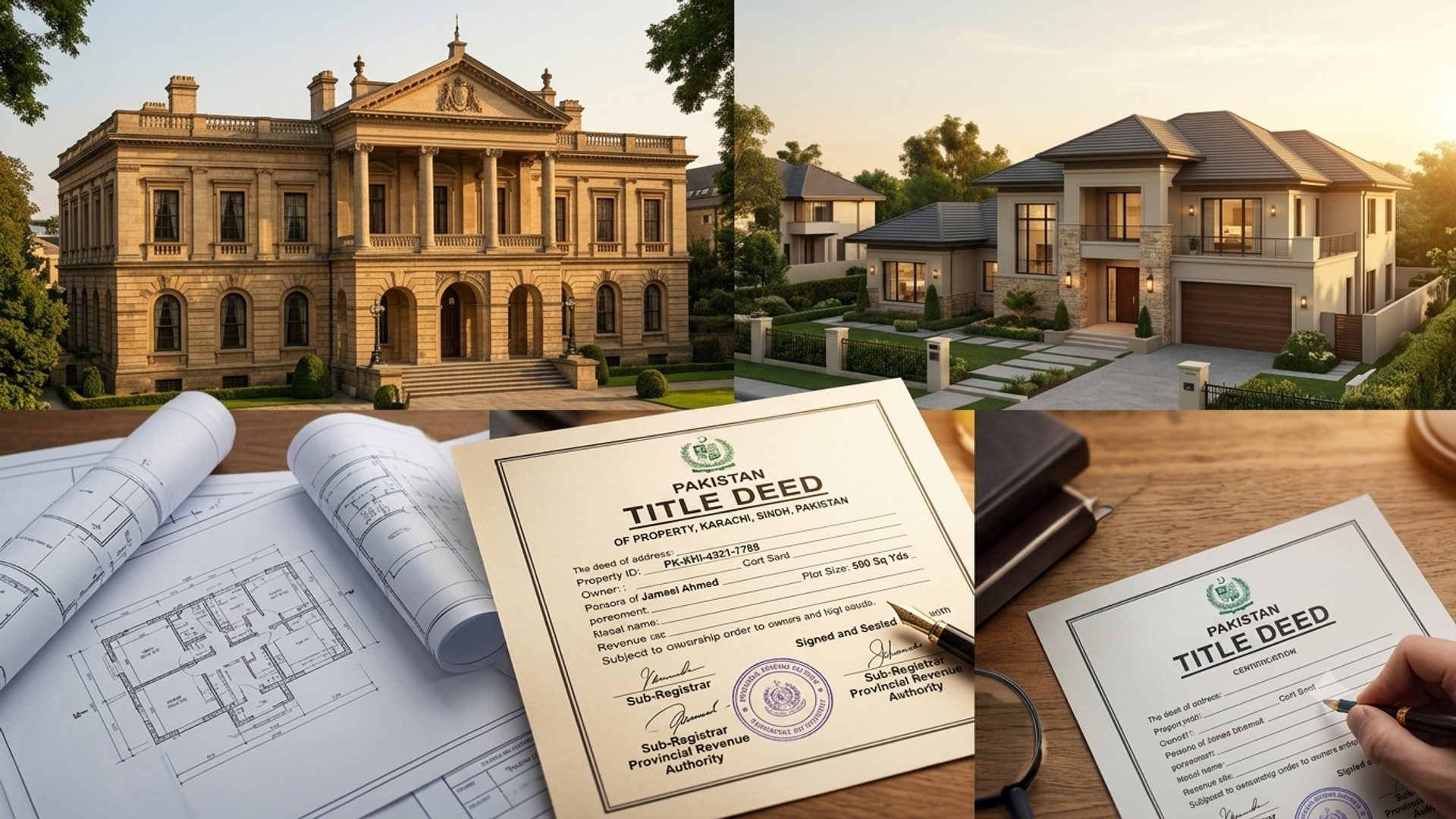
Property Law in Pakistan: Ownership and Legal Remedies
Understand title, possession, injunctions and the different legal routes for resolving a property dispute.
Transfer of Property Act 1882, Registration Act 1908 and relevant provincial land, revenue, stamp, planning and civil-procedure laws. Personal-law rules can also affect gifts and inheritance.
Property Litigation Procedure
The following issues and documents may need to be considered:
- Case assessment and document review
- Title and ownership analysis
- Legal notices and replies
- Institution and defence of civil suits
- Temporary and permanent injunctions
- Declaration and cancellation proceedings
- Possession and recovery claims
- Partition of jointly owned property
- Inheritance and succession disputes
- Illegal dispossession proceedings
- Rent and tenancy litigation
- Property fraud and forged-document cases
- Appeals, revisions, and constitutional petitions
- Execution and enforcement of decrees
Questions About This Guide
Property disputes can become more difficult when possession changes, construction begins, documents are transferred, or limitation periods expire. Early legal assessment can help identify the correct court, immediate relief, required documents, and suitable cause of action.
Call or WhatsApp: +92 316 6644789Property Litigation Procedure in Pakistan
Title, possession, contractual rights and revenue entries are different questions. Identify what is disputed and the relief needed before selecting a civil suit, rent proceeding or statutory complaint. The Illegal Dispossession Act is not a substitute for every title dispute.
Main Property Litigation Matters
| Property Dispute | Legal Assistance |
|---|---|
| Ownership dispute | Declaration of title, injunction, possession, cancellation |
| Illegal possession | Recovery of possession, injunction, dispossession proceedings |
| Fraudulent sale deed | Cancellation, declaration, restraint against further transfer |
| Joint property dispute | Partition, separate possession, accounts and injunction |
| Inheritance property | Determination of shares, partition, possession, and mutation disputes |
| Agreement to sell dispute | Specific performance, recovery of payment, cancellation |
| Landlord-tenant dispute | Eviction, rent recovery, default and tenancy proceedings |
| Encroachment dispute | Injunction, possession, demarcation and removal proceedings |
| Housing society dispute | Allotment, transfer, cancellation, possession and refund claims |
| Government authority dispute | Representation, appeal, review or constitutional proceedings |
| Mortgage dispute | Redemption, foreclosure, recovery and title-related litigation |
| Property fraud | Civil action, criminal complaint and protective court orders |
Declaration of title, injunction, possession, cancellation
Recovery of possession, injunction, dispossession proceedings
Cancellation, declaration, restraint against further transfer
Partition, separate possession, accounts and injunction
Determination of shares, partition, possession, and mutation disputes
Specific performance, recovery of payment, cancellation
Eviction, rent recovery, default and tenancy proceedings
Injunction, possession, demarcation and removal proceedings
Allotment, transfer, cancellation, possession and refund claims
Representation, appeal, review or constitutional proceedings
Redemption, foreclosure, recovery and title-related litigation
Civil action, criminal complaint and protective court orders
Property Law for Civil Litigation
Most private property disputes are litigated through civil proceedings. The appropriate remedy depends on the client's documents, possession, title, cause of action, limitation period, and the relief required.
- Declaration of ownership
- Recovery of possession
- Cancellation of instruments
- Specific performance of agreements
- Permanent injunction
- Mandatory injunction
- Temporary injunction
- Partition of immovable property
- Mesne profits and compensation
- Recovery of sale consideration
- Rectification of documents
- Redemption of mortgage
- Enforcement of easement rights
- Removal of encroachments
- Challenge to illegal mutation
- Challenge to fraudulent transfer
- Execution of property decrees
A suit should be drafted around the complete dispute. Filing only an injunction suit when a declaration, possession, cancellation, or another substantive remedy is also required may create procedural objections or incomplete relief.
Title and Ownership Disputes
A property title dispute arises when two or more persons claim ownership or when the ownership record does not correspond with possession, transfer documents, inheritance rights, or the actual chain of title. Title disputes may involve:
- Conflicting sale deeds
- Unregistered agreements
- Fraudulent mutations
- Oral sale claims
- Benami or nominee allegations
- Competing inheritance claims
- Defective allotment letters
- Revoked powers of attorney
- Duplicate files
- Forged signatures
- Improper transfer by one co-owner
- Sale by a person without lawful title
- Unauthorised transfer of trust or company property
- Disputes between beneficial and recorded owners
Review the complete chain of ownership, the authority to transfer and any restrictions before choosing a remedy.
Title Documents Commonly Reviewed
Depending on the property, relevant records may include:
- Registered sale deed
- Conveyance deed
- Lease deed
- Sublease
- Gift deed
- Relinquishment deed
- Exchange deed
- Allotment letter
- Transfer letter
- Possession letter
- Mutation or integral
- Fard or revenue record
- Property card
- Sanctioned building plan
- Society membership record
- Power of attorney
- Agreement to sell
- Payment receipts
- Tax and utility records
- Inheritance documents
- Court orders and previous decrees
Possession, mutation, allotment, registration, and title are related but not always legally identical. The value of each document depends on the governing law and the complete factual record.
Declaration of Ownership and Title
A declaratory suit may be required where a person's legal character or property right is denied or threatened. A property declaration case may seek a court finding that:
- The plaintiff is the lawful owner
- A transfer is illegal or ineffective
- A mutation does not create a valid title
- A registered document was obtained through fraud
- An opposing party has no ownership interest
- A co-owner's share has been wrongly denied
- A purported gift or sale is invalid
- A power of attorney was misused
- A housing society cancellation is unlawful
- An adverse entry in the record is without legal effect
Declaratory relief is frequently combined with possession, cancellation, injunction, partition, or another consequential remedy.
Property Injunction Lawyers in Pakistan
An injunction is often required to preserve the property until the dispute is finally decided.
- Restraint against sale or transfer
- Restraint against third-party interest
- Restraint against construction
- Restraint against demolition
- Restraint against dispossession
- Restraint against interference with possession
- Suspension of an impugned notice or action
- Protection of access and easement rights
- Maintenance of the status quo
- Removal of unlawful obstruction
- Mandatory restoration of a previous position
Temporary Injunction
A temporary injunction is an interim remedy sought during the pendency of the case. The application must be supported by relevant documents, pleadings, urgency, and the legal requirements applicable to interim protection.
Permanent Injunction
A permanent injunction is granted through a final decree after adjudication of the parties' rights.
Mandatory Injunction
A mandatory injunction may require a party to perform a particular act, remove an obstruction, restore access, or reverse an unlawful physical change.
An injunction application should be filed with the correct substantive suit. Interim relief cannot normally replace the final legal remedy required to resolve title or possession.
Illegal Possession and Dispossession Cases
Unlawful occupation may involve land grabbers, relatives, tenants, caretakers, licence holders, business partners, purchasers, co-owners, or persons relying on fraudulent documents.
- Recovery of possession
- Protection against threatened dispossession
- Eviction of unlawful occupants
- Possession based on ownership
- Possession after termination of licence
- Possession after cancellation of agreement
- Possession by unauthorised relatives
- Removal of encroachments
- Restoration after forcible dispossession
- Criminal and civil remedies arising from land grabbing
The correct remedy depends on whether the client retained possession, was forcibly dispossessed, transferred possession voluntarily, created a tenancy or licence, or is relying upon ownership without prior possession.
Illegal Dispossession Act Proceedings
The Illegal Dispossession Act 2005 may provide a criminal-law remedy in qualifying cases involving unlawful or forcible occupation or dispossession. It should not be treated as a substitute for every civil title or possession dispute. The factual ingredients, the complainant's lawful possession or ownership, the accused's conduct, and available evidence must be examined before initiating proceedings.
- Assessment of the available remedy
- Preparation of the complaint
- Documentary evidence
- Possession and title records
- Witness preparation
- Representation before the competent court
- Defence against misuse of dispossession proceedings
- Coordination with connected civil litigation
Where the title is genuinely disputed, civil proceedings may also be required.
Recovery of Possession
A suit for possession may be required where the lawful owner or entitled person has been excluded from the property. Possession claims may arise after:
- Expiry of tenancy
- Termination of licence
- Cancellation of an agreement
- Illegal occupation
- Unauthorised possession by a family member
- Refusal by a co-owner to recognise rights
- Fraudulent transfer
- Expiry of contractual permission
- Completion of sale obligations
- Partition of inherited property
- Dispossession during pending litigation
Keep certified ownership and authority records, contracts, receipts, notices and previous orders together. Identify the dates of the transaction, discovery of the dispute and service of any notice. Limitation and urgent relief must be assessed on the actual facts.
Property Fraud and Forged Documents
Property fraud may be committed through false sale deeds, impersonation, forged signatures, fabricated powers of attorney, duplicate files, fraudulent allotment letters, false mutations, manipulated society records, or unauthorised transfer by a family member or agent.
Common Property Fraud Cases
- Sale through a forged power of attorney
- Sale after the death of the principal
- Sale after revocation of authority
- Impersonation before registration authorities
- Forged thumb impressions or signatures
- Transfer without the consent of all owners
- Concealment of inheritance rights
- Fabricated agreement to sell
- Duplicate allotment or property file
- Sale of mortgaged or disputed property
- Resale to multiple purchasers
- Transfer based on false identity documents
- Tampering with revenue or society records
- Occupation through a sham tenancy
- Fraudulent gift or relinquishment deed
Preserve the disputed original and obtain records independently from the issuing office. Identify the particular document, signature or representation challenged instead of relying only on a general allegation.
Cancellation of Sale Deed and Property Documents
A registered or unregistered property document may be challenged where it is alleged to be:
- Forged
- Fraudulent
- Without consideration
- Executed under coercion
- Executed through misrepresentation
- Beyond the authority of an attorney
- Executed by a person lacking title
- Executed after cancellation of authority
- Executed without lawful consent
- Void or voidable
- Contrary to a court order
- Affecting the rights of legal heirs
- Based on fabricated ownership records
A cancellation suit should identify the document precisely and explain how it adversely affects the claimant's legal rights.
Related Relief
- Declaration
- Possession
- Injunction
- Correction of official record
- Cancellation of mutation
- Restraint against further sale
- Recovery of original documents
- Compensation or damages
Disputes Involving Powers of Attorney
Powers of attorney frequently arise in property litigation, particularly where an overseas Pakistani authorises a relative or agent to manage, sell, purchase, lease, or litigate property. Disputes may involve:
- Sale beyond granted authority
- Use after revocation
- Use after the death of the principal
- Failure to account for sale proceeds
- Self-dealing by the attorney
- Transfer to a relative or associate
- Fabricated or altered authority
- Dispute regarding attestation
- Improper use of a general power
- Failure to comply with the principal's instructions
Prepare a chronology that separates the underlying event, the date it was discovered and the date any notice was received. Those dates may affect the available procedure and the time for taking action.
Agreement to Sell and Specific Performance Litigation
A property agreement may lead to litigation where one party refuses to complete the sale, fails to pay the agreed amount, conceals a defect in title, transfers the property to another person, or disputes the agreement.
- Specific performance suits
- Defence against specific performance
- Recovery of advance payment
- Recovery of earnest money
- Cancellation of agreement
- Forfeiture disputes
- Injunction against third-party transfer
- Disputes over readiness and willingness
- Disputes over possession under the agreement
- Claims involving subsequent purchasers
- Claims based on receipts and informal documents
Specific Performance
A suit for specific performance seeks enforcement of a contractual obligation to complete the property transaction. The court considers the agreement, conduct of the parties, payment history, contractual obligations, available title, limitation, and other relevant circumstances.
Refund and Compensation
Where enforcement is unavailable or commercially unsuitable, recovery of paid amounts, compensation, damages, or other contractual relief may be considered.
Property Partition Lawyers
Partition litigation arises where two or more persons jointly own inherited, purchased, gifted, or family property and cannot agree on its possession, use, income, transfer, or division.
- Determination of ownership shares
- Partition of inherited property
- Partition among siblings
- Partition between family branches
- Partition between purchasers or investors
- Separate possession
- Injunction against exclusive occupation
- Accounts of rent and income
- Challenge to unauthorised sale
- Appointment of commissioner
- Physical division
- Sale and distribution where division is impractical
- Execution of partition decrees
Joint Ownership Does Not Always Mean Equal Ownership
The share of each party depends on the source of title, inheritance law, sale documents, gift, relinquishment, family settlement, or previous decree.
Possession by One Co-owner
Exclusive physical possession by one co-owner does not automatically determine the final ownership rights of all parties. However, the nature, duration, and legal basis of possession may be relevant.
Inheritance Property Disputes
Inherited property litigation commonly arises when one or more heirs:
- Conceal the death of the owner
- Exclude daughters or widows
- Obtain a mutation without notice
- Sell more than their lawful share
- Occupy the entire property
- Withhold rent or income
- Rely on a disputed gift
- Produce a disputed will
- Refuse partition
- Deny the relationship of another heir
- Transfer property before formal distribution
The following issues and documents may need to be considered:
- Identification of legal heirs
- Determination of shares
- Challenge to inheritance mutation
- Declaration of inherited rights
- Partition and separate possession
- Recovery of income
- Challenge to fraudulent transfer
- Administration and succession proceedings
- Injunction against sale
- Litigation over gifts and wills
- Enforcement of family settlements
Property inheritance cases must distinguish between succession rights, mutation entries, possession, registered transfers, gifts, wills, and family arrangements.
Landlord and Tenant Litigation
Landlord-tenant proceedings are governed by the applicable provincial or territorial rent law and the terms of the tenancy.
- Eviction
- Non-payment of rent
- Default
- Expiry of tenancy
- Personal bona fide need
- Unauthorised subletting
- Change of use
- Structural alteration
- Nuisance
- Rent enhancement
- Deposit of rent
- Restoration of utilities
- Disputed tenancy
- Forged rent agreements
- Recovery of arrears
- Execution of eviction orders
The appropriate forum and procedure differ according to the location of the property and the applicable rent legislation.
Commercial Property Litigation
Commercial property disputes may affect offices, shops, warehouses, factories, restaurants, malls, plazas, business premises, and development projects.
- Commercial lease disputes
- Eviction and rent recovery
- Joint investment disputes
- Development agreements
- Construction and handover disputes
- Builder-buyer claims
- Possession delays
- Unauthorised transfer
- Misuse of common areas
- Parking disputes
- Management and service-charge disputes
- Mortgage and financing issues
- Property owned by companies or partnerships
- Sale of business premises
- Enforcement of commercial agreements
Commercial property litigation may involve company law, partnership law, contract law, tax records, banking documents, and corporate authority in addition to ordinary property law.
Housing Society and Allotment Disputes
Housing-society litigation may concern cooperative societies, private developers, apartment projects, government schemes, and development-authority allotments.
- Cancellation of allotment
- Delay in possession
- Duplicate allotment
- Non-development
- Change of plot location
- Unauthorised additional charges
- Refusal to transfer membership
- Disputed nomination
- Transfer after death
- Refund of paid amount
- Failure to execute a lease or conveyance
- Encroachment on allotted property
- Change of land use
- Illegal construction
- Society election and management disputes
- Fraudulent membership record
The available remedy may lie before a civil court, cooperative authority, registrar, development authority, consumer forum, tribunal, arbitrator, or High Court, depending on the statutory and contractual framework.
Builder and Developer Disputes
Purchasers and investors may face litigation where a builder or developer:
- Delays possession
- Changes the approved plan
- Reduces the promised area
- Adds unauthorised charges
- Fails to complete construction
- Sells the same unit twice
- Does not provide utilities
- Refuses transfer documents
- Creates an unauthorised mortgage
- Delivers materially defective premises
- Fails to obtain approvals
- Cancels the booking without lawful grounds
Builders and developers may also require representation against payment defaults, unauthorised occupation, breach of booking conditions, or false purchaser claims.
Keep copies of what was actually submitted and the acknowledgement issued by the receiving office. A draft document or an adviser’s working copy should not be confused with the final official record.
Agricultural and Revenue Property Litigation
Agricultural land disputes may involve title, possession, inheritance, tenancy, boundaries, partition, mutations, revenue entries, acquisition, easements, and rights of cultivation.
- Mutation disputes
- Revenue record correction
- Agricultural partition
- Demarcation
- Boundary disputes
- Possession of agricultural land
- Inheritance entries
- Fraudulent transfer
- Challenge to revenue orders
- Appeals and revisions
- Acquisition compensation
- Access and water rights
- Tenancy and cultivation disputes
The appropriate authority may include a revenue officer, collector, commissioner, board of revenue, civil court, tribunal, or High Court.
Boundary, Encroachment and Demarcation Disputes
Boundary disputes often require both documentary and physical evidence. Relevant material may include:
- Site plan
- Survey map
- Revenue map
- Sanctioned layout
- Allotment plan
- Demarcation report
- Measurement record
- Neighbouring title documents
- Photographs
- Satellite or historical imagery
- Commissioner's report
- Witness evidence
Check the authority of any representative and the scope of the document authorising them. An authorisation for one step should not be assumed to cover a different transaction or proceeding.
Easement and Right-of-Way Disputes
Easement litigation may involve:
- Rite of passage
- Common access
- Shared driveway
- Drainage
- Watercourse
- Light and air
- Access to agricultural land
- Access through a neighbouring plot
- Obstruction of an established route
- Use of common facilities
The claimant must establish the legal or factual basis of the asserted right. Relevant evidence may include title documents, layout plans, historical use, neighbouring records, and physical inspection.
Government Acquisition and Compensation Disputes
Property owners may require representation where land is acquired or affected by a government department, development authority, infrastructure project, or public scheme.
- Challenge to acquisition proceedings
- Compensation assessment
- Enhancement of compensation
- Apportionment among claimants
- Title objections
- Delayed payment
- Possession without payment
- Reference and appellate proceedings
- Constitutional challenges, where maintainable
Government property disputes require prompt action because statutory notices and limitation periods may apply.
Property Litigation for Overseas Pakistanis
Overseas Pakistanis frequently face disputes involving occupation by relatives, misuse of powers of attorney, fraudulent sale, forged documents, tenant default, inheritance, and housing-society files.
- Online case consultation
- Document review
- Verification of available records
- Legal notices
- Civil litigation
- Criminal complaints, where appropriate
- Power of attorney preparation
- Representation through authorised counsel
- Injunctions against transfer
- Recovery of possession
- Partition and inheritance claims
- Rent and tenancy proceedings
- Court updates and certified records
Personal attendance requirements depend on the nature and stage of the proceedings. A properly executed and authenticated power of attorney may permit representation in many procedural matters, subject to court directions.
Property Law in Karachi
Identify the province, land authority and competent civil, rent or revenue forum. The location and type of property affect the documents and procedure.
Property Litigation in Karachi Commonly Includes
- Sale deed cancellation
- Possession and land-grabbing cases
- Lease and sublease disputes
- Cooperative housing society disputes
- Builder and apartment litigation
- Inheritance and partition
- Rent and eviction cases
- KDA, MDA and development-authority disputes
- Scheme 33 property disputes
- DHA and cantonment property matters
- Encroachment and boundary litigation
- Disputes involving powers of attorney
- Commercial property conflicts
- Fraudulent files and double sales
Karachi District Coverage
The following issues and documents may need to be considered:
- District Karachi East
- District Karachi Central
- District Karachi South
- District Malir
- District Korangi
- District Karachi West
- District Keamari
Karachi consultation: +92 316 6644789
Property Law in Lahore
Lahore property cases may involve:
- LDA-regulated schemes
- Private housing societies
- DHA property
- Cooperative housing
- Commercial plazas
- Agricultural land around Lahore
- Inherited urban property
- Revenue record disputes
- Builder and purchaser claims
- Rent and eviction proceedings
- Specific performance
- Cancellation of deeds
- Illegal possession
For a Lahore matter, read the applicable Punjab legislation and court procedure. Check the parties, location and existing proceedings before deciding which forum can grant the requested relief.
Lahore Office: Office No. 2, 1st Floor, Al-Mairaj Arcade, Near Surayya Azeem Trust Hospital, Chauburji Chowk, Bahawalpur Road, Mozang Chungi, Lahore, 54000, Pakistan
Phone: +92 316 6644789
Property Law in Islamabad
Islamabad property disputes may involve:
- CDA allotment and transfer
- Cancellation of plots
- Building violations
- Housing society disputes
- Possession delays
- Fraudulent transfers
- Inheritance and partition
- Rural and revenue property
- Rent matters
- Government notices
- Commercial leasing
- Constitutional proceedings
- Overseas Pakistani ownership
Islamabad Office: Office No. 5, 2nd Floor, Laraib Plaza, Karachi Company (Area Name), G-9 Markaz, Islamabad, 44000, Pakistan
Phone: +92 316 6644789
Property Law in Rawalpindi
Common matters include:
- Ownership and possession suits
- RDA-related disputes
- Housing-society litigation
- Bahria Town property disputes
- Cantonment property
- Sale agreement disputes
- Inheritance and partition
- Mutation disputes
- Rent and eviction
- Encroachment
- Illegal dispossession
- Fraudulent transfers
- Agricultural property litigation
Rawalpindi Office: Office No. 4, 2nd Floor, Al-Hameed Plaza, Marir Hassan Chowk, Rashid Minhas Road, Off Murree Road, Rawalpindi, 46000, Pakistan
Phone: +92 316 6644789
Property Law in Faisalabad, Multan and Other Cities
Services may include:
- Initial legal opinion
- Local document verification
- Filing through associated counsel
- Court representation
- Revenue proceedings
- Appeals and revisions
- Coordination between multiple cities
- Litigation involving parties residing abroad
Courts and Forums for Property Litigation
The proper forum depends on the relief, property location, statutory scheme, and nature of the dispute. Property proceedings may be filed before:
- Civil judge
- Senior civil judge
- District court
- Rent controller or rent tribunal
- Revenue officer
- Collector or commissioner
- Board of Revenue
- Cooperative authority
- Registrar of cooperative societies
- Development authority
- Cantonment authority
- Consumer forum
- Arbitrator
- Special tribunal
- Banking court
- High Court
- Supreme Court, where jurisdiction is available
Filing before the wrong forum may result in the return of the plaint, rejection, dismissal, or loss of time.
Property Litigation Procedure
A typical property case may involve the following stages:
Initial consultation
Document and title review
Identification of the cause of action
Selection of court or forum
Legal notice, where appropriate
Preparation of pleadings
Filing of suit, complaint, petition, or appeal
Application for interim relief
Service upon opposing parties
Written statement or reply
Framing of issues
Documentary and oral evidence
Cross-examination
Local commission or expert evidence
Final arguments
Judgment or order
Appeal or revision
Execution and enforcement
Not every case passes through every stage. Some disputes may be resolved through settlement, admission, preliminary objection, summary procedure, or statutory proceedings.
Documents Required for Property Litigation
Clients should provide every available document, including documents that appear unfavourable or contradictory.
Basic Documents
- CNIC, NICOP, or passport
- Complete property address
- Ownership documents
- Transfer documents
- Payment evidence
- Possession evidence
- Correspondence
- Notices
- Court papers
- Details of opposing parties
Additional Evidence
- Utility bills
- Property tax records
- Photographs and videos
- WhatsApp or email correspondence
- Bank statements
- Rent receipts
- Site plans
- Building approvals
- Society records
- Revenue documents
- Mutation entries
- Fard
- Witness details
- Police complaints
- Previous litigation record
Electronic evidence should be preserved in its original form.
Limitation in Property Cases
Different property remedies have different limitation periods. The relevant period may depend on:
- Date of document
- Date of knowledge
- Date of refusal
- Date of dispossession
- Date of cancellation
- Date possession became adverse
- Date of contractual performance
- Date of impugned order
- Nature of continuing wrong
- Disability or other recognised legal circumstances
A client should not delay consultation merely because possession or family negotiations are continuing.
Appeals, Revisions and Constitutional Petitions
An adverse property order may be challengeable through:
- Civil appeal
- Rent appeal
- Revenue appeal
- Revision
- Review
- Intra-court appeal
- Constitutional petition
- Petition before the Supreme Court
The available remedy depends on the forum, the nature of the order, the statutory framework, and the limitation period.
- Jurisdictional errors
- Misreading or non-reading of evidence
- Incorrect legal interpretation
- Procedural irregularity
- Refusal of interim relief
- Improper exercise of discretion
- Findings unsupported by the record
- Violation of due process
Execution of Property Decrees
Winning a property case does not automatically deliver possession, payment, or compliance. The decree may need to be formally executed. Execution proceedings may involve:
- Delivery of possession
- Removal of occupants
- Demarcation
- Registration of documents through the court
- Recovery of money
- Attachment of property
- Appointment of bailiff
- Police assistance
- Sale of property
- Enforcement of the injunction
- Contempt or other proceedings, where available
Obtain the certified operative order and identify exactly what it requires. Enforcement must follow the relevant procedure; a favourable decision does not by itself complete recovery or delivery of possession.
Settlement of Property Disputes
A property dispute may be settled through:
- Negotiated settlement
- Family settlement
- Partition agreement
- Relinquishment
- Sale or buyout
- Consent decree
- Mediation
- Arbitration
- Withdrawal against compliance
- Exchange of property
- Revised payment schedule
A settlement should clearly identify:
- Property description
- Ownership shares
- Possession
- Payment
- Transfer obligations
- Documents to be executed
- Tax and registration responsibilities
- Withdrawal of cases
- Default consequences
- Enforcement mechanism
Informal settlements without proper documentation frequently generate further litigation.
Legal Framework and Source Checks
The following issues and documents may need to be considered:
Where litigation is required, the case is assessed according to title, possession, evidence, jurisdiction, limitation, and enforceable relief.
Questions About This Guide
The following issues and documents may need to be considered:
- Threatened sale of disputed property
- Illegal possession
- Fraudulent documents
- Family property dispute
- Inheritance conflict
- Refusal to partition
- Sale agreement breach
- Housing society cancellation
- Tenant default
- Builder delay
- Government notice
- Adverse court order
- Need for an urgent injunction
Frequently Asked Questions About Property Litigation in Pakistan
Qanoon Group Contact Directory
Karachi Head Office
Qanoon House
T-219, Supreme Corner, Johar Chowrangi, Block 18, Gulistan-e-Johar, District Karachi East, 75290, Pakistan
+92 316 6644789District East Branch
M-51, Mezzanine Floor, Muneer Mobile Mall, Block 17, Near Perfume Chowk, Gulistan-e-Johar, District Karachi East, 75290, Pakistan
+92 316 6644789District Central Branch
BB-105, 1st Floor, Erum Avenue, Phase 1, Buffer Zone, North Karachi, North Nazimabad Town, Near Sakhi Hassan Chowrangi, District Karachi Central, 75850, Pakistan
+92 316 6644789District Karachi South Branch
206 Al-Aisha Chambers, Near Sindh High Court Buildings & Passport Office, Opposite Pakistan Election Commission & FIA Office, Saddar, Karachi South 75500, Pakistan
+92 316 6644789Karachi District Malir Branch
A-1937/B, Near Shop 399 Garment Store, Metroville III Colony, Scheme 33, Gulzar e Hijri, Maulana Yousuf Ludhianwi Road, District Malir Karachi 75330, Pakistan
+92 316 6644789Islamabad Office
Office No. 5, 2nd Floor, Laraib Plaza, Karachi Company (Area Name), G-9 Markaz, Islamabad, 44000, Pakistan
+92 316 6644789Rawalpindi Office
Office No. 4, 2nd Floor, Al-Hameed Plaza, Marir Hassan Chowk, Rashid Minhas Road, Off Murree Road, Rawalpindi, 46000, Pakistan
+92 316 6644789Lahore Office
Office No. 2, 1st Floor, Al-Mairaj Arcade, Near Surayya Azeem Trust Hospital, Chauburji Chowk, Bahawalpur Road, Mozang Chungi, Lahore, 54000, Pakistan
+92 316 6644789Applicable law and source checks
Editorial revision: . This is the guide revision date, not a law's commencement date.
Transfer of Property Act 1882, Registration Act 1908 and relevant provincial land, revenue, stamp, planning and civil-procedure laws. Personal-law rules can also affect gifts and inheritance.
First identify the province, land authority and nature of the right. Read the applicable provincial amendments and Gazette notifications alongside the underlying legislation. An online land entry or national overview is not a complete title opinion.
- Pakistan Code — Transfer of Property Act 1882
- Pakistan Code — federal legislation and Gazette access
- Sindh Law Department — provincial legislation
- Punjab Laws — provincial legislation
Check the status of a new law
Read the final Act or Ordinance, its territorial scope and commencement clause, and any implementing notification. Parliamentary passage of a bill alone does not establish that every provision is in force. Check later amendments and relevant court orders before applying a rule to your circumstances.
Further guidance and professional references
Taxocrate.com provides tax and corporate information and professional services. Advocates.com.pk covers family, property, corporate and other legal matters. These are professional reference websites, not official legislative sources.
This general guide does not determine an individual case. For a correction, email info@qanoongroup.com with the page title and official source. Please avoid sending confidential case documents in an initial enquiry.