
Trademark Registration Lawyers in Karachi
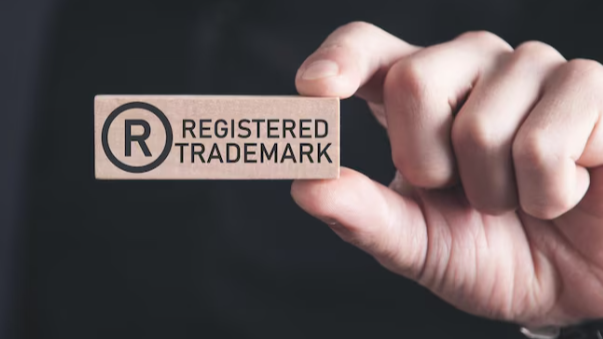
Trademark registration in Karachi helps businesses protect the names, logos, labels, slogans and commercial signs through which customers identify their products and services.
Karachi is Pakistan's largest commercial, industrial, financial and trading centre. Manufacturers, importers, exporters, restaurants, textile businesses, pharmaceutical companies, software houses, property developers, retailers and online sellers compete in a market where a successful brand can be copied quickly.
After filing, retain the application number and monitor correspondence. Respond to examination objections within the applicable deadline. Publication provides an opportunity for opposition; an application receipt is not the final registration certificate.
The objective is not merely to submit an application. It is to identify avoidable risks, select the correct protection and build a stronger ownership record for the business.
Call or WhatsApp: +92 316 6644789
Quick Overview of Trademark Registration in Karachi
| Question | Practical Answer |
|---|---|
| Who can apply? | Individuals, sole proprietors, partnerships, companies, organisations and eligible foreign applicants |
| What can be protected? | Brand names, logos, slogans, labels, symbols, device marks and service marks |
| Where is the application filed? | Through the applicable IPO-Pakistan and Trade Marks Registry procedure |
| Is registration limited to Karachi? | No. A Pakistani trademark registration generally has nationwide effect within its registered scope |
| Can objections arise? | Yes. The Registry may object on similarity, distinctiveness, classification or other legal grounds |
| Can another party oppose? | Yes. An accepted application may be opposed after advertisement |
| How long is registration valid? | Ordinarily ten years, renewable for further ten-year periods |
| Is company registration enough? | No. SECP company registration does not automatically register a trademark |
| Can overseas clients apply? | Yes, subject to documentation, authority and address-for-service requirements |
| Is a lawyer legally compulsory? | Not in every application, but legal review can reduce avoidable filing and enforcement problems |
Why Trademark Registration Matters for Karachi Businesses
A business may spend years developing goodwill in a brand, only to discover that another person has adopted a similar name, copied its label or filed an earlier trademark application.
Registration creates a formal record identifying the proprietor of the mark and the goods or services for which protection has been granted.
Protection Against Brand Imitation
A registered trademark can provide a stronger legal basis for challenging an identical or confusingly similar mark used without authority.
Clear Ownership Record
Registration records the proprietor's name, address, mark, class and relevant goods or services. This record can become important in disputes, licensing arrangements, investment transactions and business sales.
Support for Online Complaints
Online businesses frequently encounter copied product listings, impersonating pages, misleading advertisements and unauthorised use of logos. A registration certificate can support platform complaints and legal notices, subject to the relevant platform's rules.
Commercial Expansion
A registered brand may be licensed, assigned or used in franchise and distribution arrangements. Early protection also reduces the risk of changing a name after expansion into another city or product category.
Stronger Enforcement Position
An unregistered brand may still have passing-off rights where reputation, goodwill and misrepresentation can be proved. Registration, however, normally gives the proprietor a clearer statutory basis for enforcement.
Trademark Law Applicable in Karachi
Pakistan's federal trademark framework governs trademark registration in Karachi. The principal legislation includes the Trade Marks Ordinance, 2001 and the Trade Marks Rules, 2004.
Applications are processed through the Trade Marks Registry operating under the Intellectual Property Organisation of Pakistan, commonly referred to as IPO-Pakistan.
The law addresses:
- Eligibility and ownership
- Registrable and prohibited marks
- Examination of applications
- Advertisement in the Trade Marks Journal
- Opposition proceedings
- Registration and renewal
- Assignment and licensing
- Infringement and passing off
- Appeals and rectification
- International trademark arrangements
A trademark registered under Pakistani law is not restricted to one city. A Karachi business ordinarily seeks protection under the national system rather than obtaining separate registrations for Karachi, Lahore and Islamabad.
Trademark Registration Procedure in Karachi
For a Karachi matter, identify the relevant district, authority and existing record. A city address alone does not establish the jurisdiction of every court or administrative office.
| Service | Record ownership changes and licences where required, diarise renewal and keep evidence of use. Rights are territorial and subject to the statute; a Pakistani registration does not automatically establish protection in another country. |
|---|---|
| Trademark search | Exact, similar, phonetic and commercially related marks |
| Legal availability review | Distinctiveness, descriptiveness and potential conflicts |
| Class selection | Present and planned goods or services |
| Application filing | Ownership, mark representation, specification and supporting documents |
| Objection reply | Legal grounds raised by the examiner |
| Hearing representation | Arguments, evidence and clarification before the Registry |
| Opposition | Notice, counter-statement, evidence and contested proceedings |
| Renewal | Expiry, ownership details and renewal requirements |
| Assignment | Transfer of ownership and recordal |
| Licensing | Commercial use by another person or business |
| Infringement advice | Registration, use, evidence, similarity and available remedies |
| International filing | Direct foreign filing or Madrid System planning |
Trademark Search and Brand Clearance
A trademark search should ideally be completed before substantial investment is made in packaging, signage, advertising, websites or product development.
A search is not limited to finding an identical word. Conflicts may also arise from:
- Similar spellings
- Phonetically similar names
- Urdu and English variations
- Similar logos or devices
- Related products or services
- Earlier applications
- Well-known or established marks
- Similar overall commercial impressions
For example, changing one letter in a competitor's brand may not make a proposed mark legally safe. The relevant question may be whether consumers are likely to believe that the goods or services come from the same or commercially connected sources.
No search can provide a guarantee of registration. It provides a reasoned risk assessment based on available records and the proposed commercial use.
Trademark Class Selection
Trademark protection is connected to the goods or services identified in the application.
The Nice Classification contains 45 classes:
- Classes 1–34 generally relate to goods.
- Classes 35–45 generally relate to services.
A single business may require more than one class.
Examples
| Business | Potential Areas Requiring Review |
|---|---|
| Restaurant | Food products, restaurant services, delivery or retail services |
| Clothing brand | Garments, footwear, accessories and retail services |
| Software business | Downloadable software, SaaS and technology services |
| Pharmaceutical company | Medicinal products, cosmetics or healthcare-related services |
| Property developer | Construction, real estate and project-management services |
| Training institute | Education, publications and digital-learning services |
| E-commerce seller | Goods sold, marketplace or retail services |
The final class selection depends on the exact business activity. Filing in an irrelevant class can waste money, while filing too narrowly can leave important commercial areas unprotected.
Trademark Registration Process in Karachi
Step 1: Initial Brand Review: The proposed word, logo, label, slogan or device is reviewed together with the nature of the business and the identity of the proposed proprietor.
Step 2: Trademark Search: Searches are conducted to identify identical or potentially confusing earlier marks. The results are reviewed for legal and commercial risk.
Step 3: Ownership Confirmation: The application may be filed in the name of an individual, sole proprietor, partnership, company or another eligible legal person. Correct ownership matters, as filing in the wrong name can create difficulties during investment, transfer, enforcement or corporate restructuring.
Step 4: Class and Specification: The relevant class or classes are selected. The goods or services must be described clearly and accurately.
Step 5: Application Preparation: The application is prepared with the proprietor's information, representation of the mark, classification and supporting authority documents.
Step 6: Filing: The application is filed through the applicable Trade Marks Registry procedure. An acknowledgement or filing record is then issued. A filing acknowledgement is not a registration certificate.
Step 7: Examination: The Registry examines the application for compliance with the law. It may raise objections relating to similarity, lack of distinctiveness, descriptive wording, classification or other legal issues.
Step 8: Reply and Hearing: Where an objection is raised, the applicant may submit a legal response, supporting evidence and clarification. A hearing may also be required.
Step 9: Advertisement: If the mark is accepted, it is advertised in the Trade Marks Journal. Interested parties may file opposition within the prescribed period.
Step 10: Registration: If no opposition is filed, or an opposition is resolved in the applicant's favour, the application may proceed to registration after completion of the remaining requirements.
Documents Required for Trademark Registration in Karachi
Individual or Sole Proprietor
- CNIC or passport copy
- Full name and address
- Proposed word mark or logo
- Description of business activities
- Goods or services requiring protection
- Business address
- Contact information
- Authority or power of attorney, where required
Private Limited Company
- Certificate of incorporation
- Company name and registered address
- Proposed trademark
- Goods or services description
- Authorised representative's details
- Board or corporate authority, where required
- Power of attorney or filing authority
Partnership or AOP
- Partnership or AOP particulars
- Partner or member information
- Business address
- Proposed mark
- Description of goods or services
- Filing authority
Foreign Applicant
- Legal name and country
- Incorporation or identity documents
- Proposed trademark
- Goods or services specification
- Local address for service
- Authorisation or power of attorney
- Priority documents, where applicable
Requirements may vary according to the mark, ownership structure, prior-use claim and procedural stage.
Trademark Registration for Karachi's Major Business Sectors
Manufacturers and Industrial Businesses
Karachi's industrial areas contain manufacturers working in food, chemicals, plastics, engineering, textiles, pharmaceuticals, cosmetics and consumer goods.
A manufacturer may require protection for:
- Corporate brand
- Product name
- Product-line name
- Label
- Packaging
- Logo
- Export brand
- House mark
Manufacturers should consider whether separate word and logo applications are commercially justified.
Importers, Exporters and Trading Companies
Karachi is Pakistan's principal port and trading centre. Importers and exporters often use brands in more than one jurisdiction.
A Pakistan registration does not automatically create protection abroad. Businesses planning exports should consider target-country filings or Madrid System options.
Importers should also confirm that use of a foreign brand is properly authorised and does not infringe existing Pakistani rights.
Textile, Fashion and Clothing Brands
Clothing labels, textile manufacturers, boutiques, shoe brands and accessory businesses rely heavily on brand recognition.
Protection may be required for the brand name, logo, product labels, retail services and online-store identity. Filing only a stylised logo may not provide the same flexibility as separately protecting the word mark.
Restaurants and Food Businesses
Restaurants, cafés, bakeries, catering businesses, cloud kitchens and packaged-food brands frequently face name imitation.
A search should be completed before major spending on:
- Signboards
- Packaging
- Menus
- Delivery applications
- Social-media advertising
- Franchising
- Interior branding
A restaurant name may require review in more than one class depending on the goods and services offered.
Pharmaceutical and Cosmetic Businesses
Pharmaceutical, healthcare, skincare and cosmetic marks require careful clearance because similar names may create both commercial and consumer-safety concerns.
The trademark process does not replace approvals required from sector-specific regulators. Trademark and regulatory reviews are separate matters.
Technology and Software Companies
Karachi's software houses, SaaS businesses, mobile applications and digital agencies may need protection for:
- Company brands
- Application names
- Software names
- Platform names
- Logos
- Subscription services
- Technology consultancy
Technology businesses planning foreign expansion should consider international protection before launch in major overseas markets.
E-Commerce and Online Sellers
Online sellers can grow rapidly but are exposed to copying on social media, marketplaces and websites.
Registration may support:
- Marketplace complaints
- Takedown requests
- Legal notices
- Investor due diligence
- Franchise agreements
- Distributor contracts
- Brand valuation
The registration should cover the relevant goods or services rather than merely the fact that they are sold online.
Real Estate and Construction Businesses
Builders, developers, contractors, property portals and real estate agencies may seek trademark protection for company brands, project identities and service names.
Registration of a company or approval of a project name does not automatically create trademark protection.
Trademark Objections in Karachi
An examination objection may arise where the Registry considers that the proposed mark:
- Is similar to an earlier mark
- Lacks distinctiveness
- Merely describes the goods or services
- Contains generic terminology
- Has been filed in an unsuitable class
- Includes prohibited or deceptive matter
- Contains incomplete information
- Creates uncertainty about ownership
An objection should be answered according to the actual legal grounds. A generic response may fail to deal with the examiner's concerns.
Evidence may include invoices, advertisements, packaging, website records, sales information, prior-use material and explanations concerning the mark's distinctiveness.
Trademark Opposition Proceedings
After acceptance, a trademark application is advertised. Another party may oppose registration where it claims earlier rights or another legal ground.
Opposition proceedings may involve:
Notice of opposition
Counter-statement
Supporting evidence
Evidence in reply
Written submissions
Hearing
Settlement discussions
Registrar's decision
Appeal, where maintainable
Opposition should not be ignored. Failure to respond within the applicable period may result in abandonment or an adverse decision.
Record ownership changes and licences where required, diarise renewal and keep evidence of use. Rights are territorial and subject to the statute; a Pakistani registration does not automatically establish protection in another country.
Trademark Infringement and Passing Off
Trademark infringement generally concerns unauthorised use falling within the rights created by a registered mark.
Passing off may protect an unregistered business identity where the claimant can establish sufficient goodwill, misrepresentation and resulting damage or likelihood of damage.
Possible actions may include:
- Cease-and-desist notice
- Commercial negotiation
- Platform complaint
- Civil proceedings
- Interim injunction
- Permanent injunction
- Damages
- Account of profits
- Delivery or disposal of infringing material
- Customs or criminal remedies where legally applicable
The appropriate action depends on the registration, use, evidence, classes and conduct of the parties.
Trademark Registration Fee in Karachi
Trademark costs depend on the work required in each matter.
| Cost Factor | Why It Matters |
|---|---|
| Number of marks | Word and logo marks may require separate applications |
| Number of classes | Each class requires separate consideration and official charges |
| Search requirements | Complex or multi-class searches require additional review |
| Applicant structure | Individual, company and foreign-applicant documents differ |
| Objections | Examination replies and hearings involve additional work |
| Opposition | Contested proceedings require pleadings and evidence |
| Assignment | Ownership transfer requires documentation and recordal |
| Renewal | Cost depends on status, expiry and restoration issues |
| International filing | Target countries and Madrid designations affect cost |
Use the current official fee schedule for the particular application. Taxes, statutory penalties and optional professional charges are different items. Confirm the relevant category and supporting documents before making a payment.
The quotation should identify whether it covers:
- Search
- Application drafting
- Official filing charges
- Objection reply
- Hearing
- Opposition
- Registration-stage formalities
- Certificate follow-up
How Long Does Trademark Registration Take?
There is no reliable fixed period for every trademark application.
The timeline depends on:
- Registry workload
- Completeness of documents
- Similar earlier marks
- Examination objections
- Hearing requirements
- Advertisement
- Third-party opposition
- Completion of official formalities
A filing acknowledgement is normally obtained much earlier than final registration. Businesses should avoid treating an application number as proof that registration has been granted.
Trademark Registration vs Company Registration
| Company Registration | Trademark Registration |
|---|---|
| Creates a legal corporate entity | Protects a brand identifier |
| Handled through SECP | Administered through IPO-Pakistan |
| Records corporate name | Records a mark in specified classes |
| Does not automatically protect product brands | May protect names, logos and service marks |
| May own multiple trademarks | May be owned by a company or another eligible person |
A company may own several brands, products, applications, labels and logos. Each may require separate trademark consideration.
Trademark Registration vs Copyright
Trademark and copyright protect different assets.
Trademark law protects signs that distinguish goods or services, such as brand names and logos.
Copyright protects qualifying original literary, artistic, musical and other works.
A logo may raise both trademark and copyright issues, but registration under one system does not automatically provide registration under the other.
Trademark Renewal, Assignment and Licensing
A trademark registration is ordinarily granted for ten years and may be renewed for successive ten-year periods.
Businesses should maintain updated records regarding:
- Proprietor's name
- Address
- Corporate restructuring
- Assignment
- Merger
- Licensing arrangements
- Franchise use
A change in ownership should be documented and recorded. Informal transfers can create uncertainty during enforcement or due diligence.
Qanoon Group Contact Directory
Appointments and document submission should be coordinated before visiting.
Karachi Head Office
Qanoon House
T-219, Supreme Corner, Johar Chowrangi, Block 18, Gulistan-e-Johar, District Karachi East, Karachi 75290, Pakistan
+92 302 6644789District East Branch
M-51, Mezzanine Floor, Muneer Mobile Mall, Block 17, Near Perfume Chowk, Gulistan-e-Johar, District Karachi East, Karachi 75290, Pakistan
+92 336 3747047District Central Branch
BB-105, First Floor, Erum Avenue, Phase 1, Buffer Zone, Near Sakhi Hassan Chowrangi, District Karachi Central, Karachi 75850, Pakistan
+92 333 1127837Karachi South Branch
206, Al-Aisha Chambers, Near Sindh High Court Buildings and Passport Office, Saddar, District Karachi South, Karachi 75500, Pakistan
+92 333 1127835District Malir Branch
A-1937/B, Metroville III Colony, Scheme 33, Gulzar-e-Hijri, District Malir, Karachi 75330, Pakistan
+92 333 1127830Nationwide Protection from a Karachi-Based Legal Team
Although this page is focused on trademark registration in Karachi, a Pakistani trademark registration generally operates nationally within its registered scope.
A trademark must be evaluated for registrability and conflicting rights. Search for identical and similar marks, not just exact spellings. Descriptive or common words, misleading signs and earlier rights can raise objections. A search reduces uncertainty but is not an approval guarantee.
Karachi clients planning expansion into Lahore, Islamabad, Rawalpindi or other cities normally do not need separate city registrations for the same mark and class.
Legal Framework and Source Checks
Read the primary legislation together with relevant amendments, rules and notifications. Where an online consolidation is incomplete or under review, verify the operative text before relying on it for a particular case.
The following issues and documents may need to be considered:
- Identify the applicable law and jurisdiction
- Check the law and notification effective dates
- Keep complete supporting documents
- Verify the correct authority or court
- Record filing and response deadlines
- Preserve acknowledgements and orders
- Check subsequent amendments
- Separate a bill from an enacted law
- Identify the applicable law and jurisdiction
- Check the law and notification effective dates
Trademark matters are handled with central legal coordination and access to local support where required.
About Qanoon Group
Qanoon Group is chaired by Mohsin Ali Shah, a senior Pakistani lawyer with more than four decades of professional practice.
His areas of legal experience include corporate law, taxation, intellectual property, family law and property matters. Under his leadership, Qanoon Group has developed a nationwide network of member law firms serving individuals, businesses, corporate organisations and overseas clients.
The trademark practice reflects the Group's broader focus on legal accuracy, commercial understanding and long-term client protection.
Start Trademark Registration in Karachi
Before investing heavily in a new name, logo, label or product identity, obtain a trademark search and legal review.
Call or WhatsApp: +92 316 6644789
Frequently Asked Questions
Applicable law and source checks
Editorial revision: . This is the guide revision date, not a law's commencement date.
Trade Marks Ordinance 2001 and Trade Marks Rules 2004 for trademarks; copyright, patents and registered designs are governed by separate legislation.
WIPO Lex provides the Pakistani trademark legislation and rules. A historical legislative text does not establish today's filing fee or examination time. Verify current Registry notices and the file-specific deadline before submitting a document.
- WIPO Lex — Pakistan Trade Marks Ordinance 2001
- WIPO Lex — Pakistan Trade Marks Rules 2004
- Pakistan Code — federal legislation and Gazette access
Check the status of a new law
Read the final Act or Ordinance, its territorial scope and commencement clause, and any implementing notification. Parliamentary passage of a bill alone does not establish that every provision is in force. Check later amendments and relevant court orders before applying a rule to your circumstances.
Further guidance and professional references
Taxocrate.com provides tax and corporate information and professional services. Advocates.com.pk covers family, property, corporate and other legal matters. These are professional reference websites, not official legislative sources.
This general guide does not determine an individual case. For a correction, email info@qanoongroup.com with the page title and official source. Please avoid sending confidential case documents in an initial enquiry.